
 +91-8248330697
Yes Media
September 13, 2026
Which SEO Services Can Help Your Business Rank Higher?
Ranking higher in search results can help businesses become more visible to potential customers, attract relevant website visitors, and create more opportunities for leads and sales. But achieving sustainable search visibility requires more than adding keywords to a website.
Search Engine Optimization (SEO) combines several activities, including keyword research, technical improvements, content optimization, local SE, and authority building. When these activities work together, they help search engines understand a website and help users find relevant information more easily.

SEO Services That Help Your Business Rank Higher
Businesses can improve their search visibility through a combination of keyword research, on-page SEO, technical SEO, content optimization, local SEO, link building, competitor analysis, and ongoing performance monitoring. The right combination depends on the website, industry, competition, target audience, and business objectives
Keyword Research and Search Intent Analysis
Effective SEO starts with understanding what potential customers search for. Keyword research identifies relevant terms and phrases, while search intent explains what users expect to find when they search.
A strong strategy considers informational, commercial, and transactional searches. Keywords should then be mapped to appropriate pages rather than targeting the same term across multiple URLs. This helps create a clear relationship between search queries and website content.
On-Page SEO Optimization
On-page SEO improves the information and structure of individual webpages. It can include optimizing title tags, meta descriptions, headings, URLs, internal links, images, and supporting content.
Keywords should be incorporated naturally while maintaining readability. Clear headings and descriptive page elements also help users and search engines understand what each page offers.
Technical SEO
Technical SEO focuses on how efficiently search engines can access, crawl, understand, and index a website.
Important areas include XML sitemaps, robots.txt, canonical tags, broken links, redirects, mobile usability, page speed, and Core Web Vitals. Resolving technical barriers creates a stronger foundation for other SEO activities.
SEO Content Optimization
Useful content is an important part of sustainable search visibility. Content should answer the questions users actually have and provide information that is accurate, relevant, and easy to understand.
Businesses can improve existing pages, create topic-focused articles, answer frequently asked questions, and develop comprehensive resources. Content Marketing can support SEO by consistently creating useful information that attracts and educates potential customers.
Local SEO
Businesses serving specific locations can benefit from local SEO. This includes optimizing a Google Business Profile, maintaining accurate business information, managing genuine customer reviews, building relevant citations, and creating useful location-based website content.
Local SEO helps businesses become more discoverable when people search for products or services in a particular area.
Off-Page SEO and Link Building
Off-page SEO focuses on signals that exist beyond the website itself. Relevant, authoritative backlinks can help demonstrate that a website is referenced by other sources within its industry or subject area.
Quality matters more than simply acquiring a large number of links. Digital PR, relevant industry mentions, partnerships, and legitimate outreach can contribute to a stronger backlink profile.
Competitor SEO Analysis
Competitor analysis helps identify opportunities that may otherwise be overlooked. Businesses can examine competitors’ keyword coverage, content topics, backlink profiles, page structures, and search visibility.
The goal should not be to copy competitors. Instead, the analysis can reveal content gaps and opportunities to create more useful, complete, and relevant resources.
SEO Performance Tracking and Reporting
SEO requires continuous measurement because rankings, search behaviour, competitors, and website performance can change over time.
Important metrics include keyword visibility, organic traffic, search impressions, clicks, qualified leads, conversions, and return on investment. These insights help determine which activities are producing meaningful business outcomes.
Which SEO Services Should Your Business Prioritize?
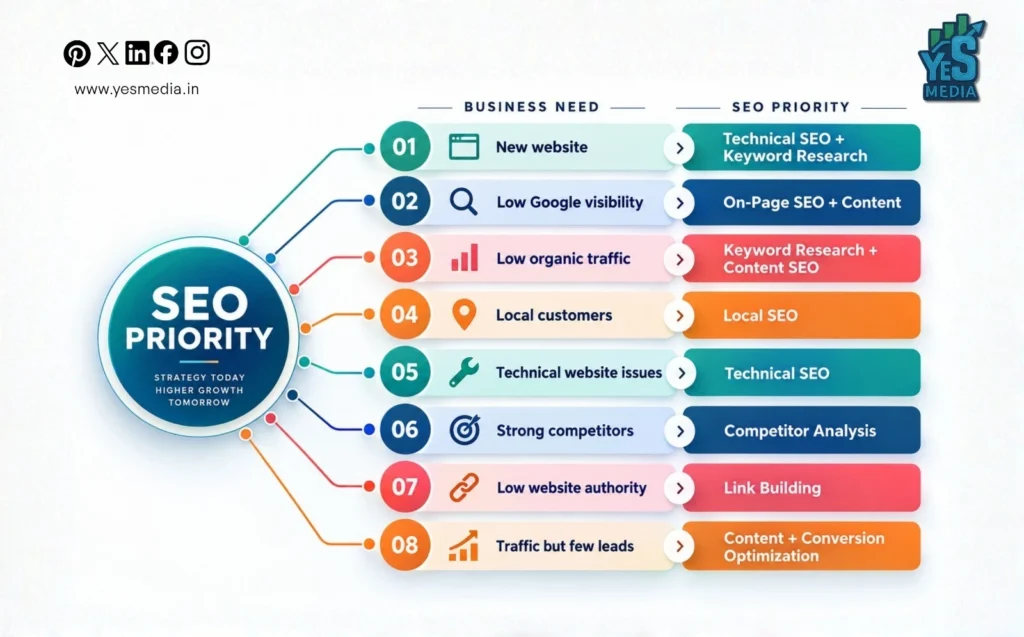
Business Need | SEO Priority |
New website | Technical SEO + Keyword Research |
Low Google visibility | On-Page SEO + Content |
Low organic traffic | Keyword Research + Content SEO |
Local customers | Local SEO |
Technical website issues | Technical SEO |
Strong competitors | Competitor Analysis |
Low website authority | Link Building |
Traffic but few leads | Content + Conversion Optimization |
Prioritizing services according to actual business needs can make SEO more focused and measurable.
How Long Does SEO Take to Improve Rankings?
SEO does not have a universal timeline. Results depend on factors such as keyword competition, website authority, technical condition, content quality, industry, and consistency.
Some technical improvements may produce relatively quick changes, while competitive keywords can require sustained optimization and content development. Rather than expecting a fixed number of days, businesses should monitor progress through visibility, traffic, leads, and conversions.
How Can You Measure the Success of SEO?
- Keyword Rankings: Monitor how target keywords perform and whether the website is gaining visibility for relevant searches.
- Organic Traffic: Analyze whether search engines are bringing more relevant visitors to the website.
- Search Impressions and Clicks: Google Search Console data can show how often pages appear in search and how frequently users click them.
- Organic Leads: Measure enquiries, calls, form submissions, purchases, or other meaningful actions generated through organic search.
- Conversion Rate: Traffic becomes more valuable when visitors take meaningful actions. Conversion rate helps measure how effectively website traffic supports business goals.
- Return on SEO Investment: Comparing SEO costs with qualified leads, sales, or revenue can provide a clearer picture of business value.
How Do You Choose the Right SEO Services for Your Business?
Start with your business objectives rather than choosing services simply because they are popular. Identify your target audience, understand their search behaviour, review your current website, and analyze competitors.
An SEO strategy should then prioritize the areas with the greatest potential impact. Regular measurement allows the strategy to evolve as performance data becomes available.
Build a Stronger Search Presence With the Right SEO Strategy
Higher rankings are usually the result of multiple SEO activities working together. Relevant keywords help identify opportunities, technical SEO supports accessibility, useful content answers customer questions, and authority-building activities strengthen the website’s overall search presence.
At Yes Media, SEO can be approached as an ongoing process rather than a one-time activity. By combining technical improvements, content optimization, search intent analysis, and performance tracking, businesses can build a stronger foundation for sustainable organic visibility.
The objective is not simply to rank for more keywords. It is to become more visible when the right audience is searching for information, products, or services that the business can genuinely provide.