
 +91-8248330697
Yes Media
September 29, 2026
How Is AI Changing the Way People Search for Businesses Online?
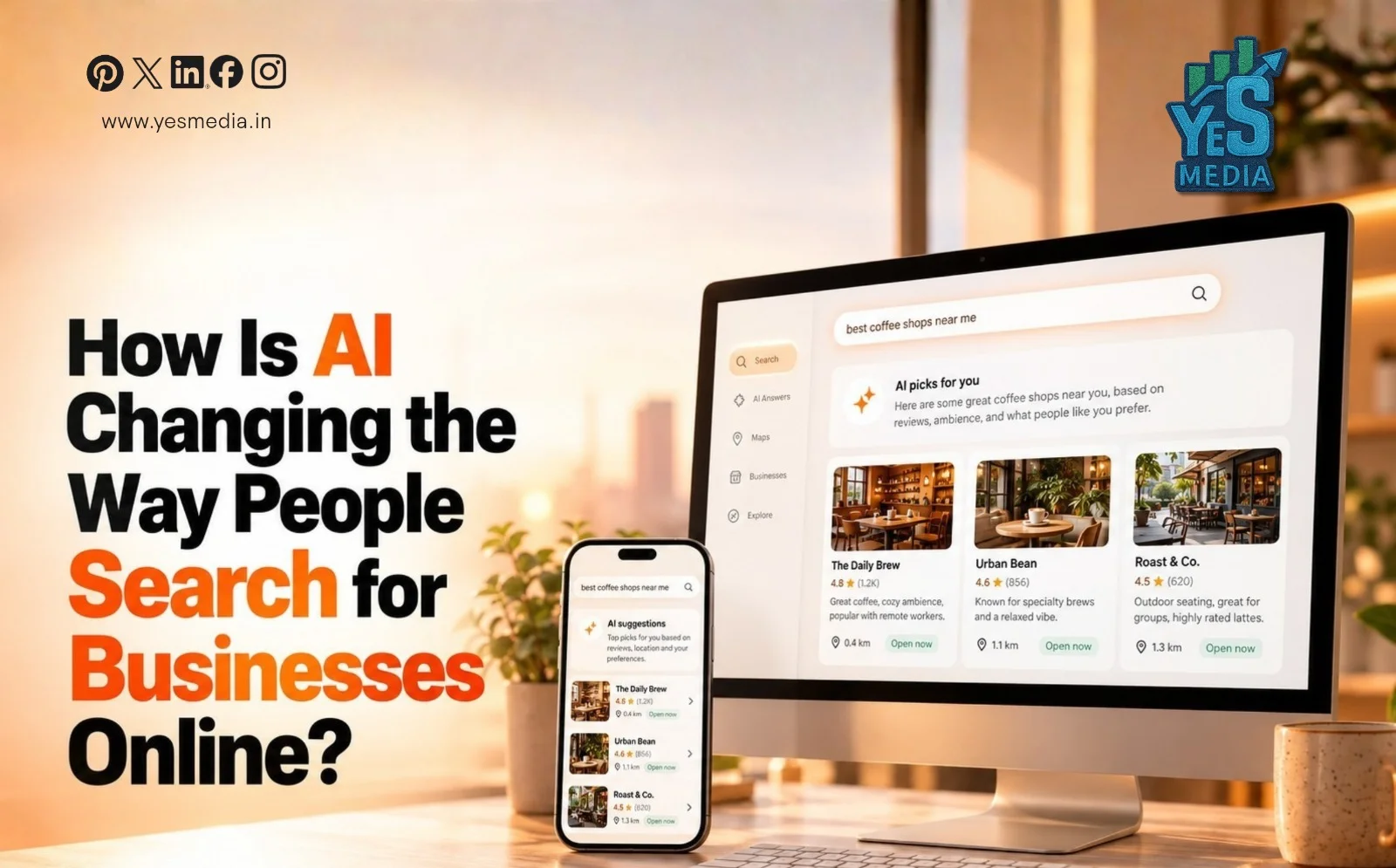
AI is changing how people search for businesses online. Instead of relying only on short keywords, users can now ask detailed, conversational questions and receive more contextual answers. This shift is changing how businesses approach online visibility. Traditional SEO remains important, but businesses also need clear, useful, and trustworthy content that helps both users and AI systems understand their services, expertise, and relevance.
1. From Keywords to Conversational Search
Traditional search behaviour often involved short, keyword-based queries. For example, someone looking for a digital marketing agency might search for “digital marketing agency in Trichy.”
AI-powered search allows users to be much more specific. They might ask, “What should I look for when choosing a digital marketing agency for a growing business?”
The second query provides more context about the user’s needs and expectations. AI systems can interpret these different elements rather than simply matching individual keywords.
For businesses, this means content should address real customer questions and problems. Instead of creating pages that repeatedly use the same keyword, businesses can provide useful explanations, comparisons, guides, FAQs, and practical information related to their industry.
2. AI Is Changing How People Discover Businesses
Search engines traditionally directed users to a list of websites. Users then had to visit multiple pages to collect information and make a decision.
AI-powered search can bring information from different sources together and provide a more comprehensive response. Depending on the search platform and query, users may receive information about services, products, locations, reviews, and other business details without immediately visiting several websites.
This creates a new form of digital visibility. A business may need to be discoverable not only through traditional search rankings but also through the information that AI systems use when generating responses.
3. Search Is Becoming More Intent-Driven
AI is also making search more focused on user intent.
A person searching for “SEO” could simply be looking for information. Another person searching for “SEO services for a small business” has a stronger commercial intent.
Search intent can generally fall into several categories:
- Informational: Users want to understand a topic or solve a problem.
- Commercial: Users are researching products, services, or businesses before making a decision.
- Local: Users are looking for businesses or services in a specific location.
- Transactional: Users are ready to take an action such as purchasing, booking, or contacting a business.
Businesses can improve their content strategy by understanding these different types of intent and creating content that answers each stage of the customer’s journey
4. Local Business Search Is Also Evolving
AI is influencing local business discovery as well. Users can combine their location with specific requirements instead of simply searching for a business category.
For example, rather than searching only for “digital marketing agency near me,” a user might ask, “Which digital marketing agency can help a local business improve its Google visibility and generate more qualified leads?”
For local businesses, maintaining accurate information across online platforms is therefore essential. Business name, address, phone number, operating hours, services, categories, website information, and reviews should be consistent and up to date.
A well-maintained Google Business Profile and strong local SEO foundation can help search systems understand what a business offers and where it operates.
5. Reviews and Online Reputation Matter More
Before contacting a business, customers often research what other people have experienced. Reviews, ratings, business mentions, and third-party information can contribute to this research process.
AI-powered search can use information from different sources when helping users understand a business. This makes online reputation an important part of digital visibility.
Businesses should focus on providing a good customer experience and encouraging genuine feedback. Reviews should accurately reflect real customer experiences rather than relying on artificial or misleading content.
It is also important for businesses to ensure that information on their website matches information available across relevant business directories and other authoritative platforms.
6. Websites Need to Answer Questions, Not Just Target Keywords
A website should do more than contain keywords. It should answer the questions customers actually have.
For example, instead of creating a page that repeatedly targets “digital marketing agency,” an agency could explain:
- What does a digital marketing agency do?
- Which digital marketing services does a business need?
- How does SEO help long-term visibility?
- What is the difference between SEO and paid advertising?
- How does AEO help businesses appear in AI-powered search?
- What should businesses consider before choosing a marketing agency?
This type of content provides context and demonstrates subject knowledge.
Clear headings, concise answers, FAQs, relevant examples, internal links, and well-structured content can also make information easier for both users and search systems to understand.
7. The Growing Importance of AEO and GEO
The evolution of AI search has increased attention on Answer Engine Optimization (AEO) and Generative Engine Optimization (GEO).
Traditional SEO focuses on improving a website’s visibility in search engine results. AEO focuses more heavily on providing direct answers to user questions, while GEO focuses on improving the likelihood of a brand or its content being surfaced within generative AI experiences.
These approaches do not replace SEO. Instead, they expand the way businesses think about search visibility.
A modern content strategy can therefore combine keyword research, search intent, clear answers, structured information, authoritative references, and content that directly addresses user needs.
8. Structured Data and Clear Business Information
AI systems and search engines need to understand what a website represents. Clear website structure and structured data can help communicate information about a business, its services, products, and other relevant entities.
Depending on the website, businesses may use structured data such as Organization, LocalBusiness, Service, or Product schema.
However, structured data should support accurate information rather than replace good content. Businesses should first make sure their important information is clearly presented on the website and consistently maintained across relevant platforms.
Technical SEO, crawlability, internal linking, page structure, metadata, and schema can all contribute to creating a website that is easier for search systems to interpret.
9. What Businesses Should Do to Stay Visible
As AI changes search behaviour, businesses can take several practical steps:
- Create helpful, people-first content that addresses genuine customer needs.
- Answer specific questions related to products, services, pricing considerations, processes, and common problems.
- Strengthen local SEO by maintaining accurate business information.
- Improve technical SEO so search engines can crawl and understand the website effectively.
- Use clear content structures, including descriptive headings, FAQs, lists, and concise explanations.
- Monitor brand visibility across traditional search and emerging AI-powered search experiences.
The goal is not simply to create more content. It is to create useful, reliable information that clearly communicates what the business does and why it is relevant to a particular user.
10. The Future of Business Search
The future of search is increasingly moving from “find a website” toward “get an answer.”
Users may increasingly rely on AI to research options, compare businesses, understand services, and narrow down their choices before visiting a website. This does not mean traditional search engines or websites are becoming irrelevant. Instead, the search journey is becoming more complex and interconnected.
Businesses that want to remain visible need to think beyond individual rankings. Their information should be clear across their website, business profiles, reviews, directories, and other authoritative online sources.
Digital marketing agencies like Yes Media can play a role in this transition by helping businesses adapt their SEO, content, AEO, GEO, local search, and digital marketing strategies to changing user behaviour.
Conclusion
AI is making business search more conversational, contextual, and intent-driven. Businesses now need to look beyond keyword rankings and focus on useful content, accurate information, strong reputation, and clear answers. Combining SEO with AEO and GEO can help businesses adapt to changing search behaviour and improve their chances of being discovered when potential customers use both traditional search engines and AI-powered platforms.